Canada's Housing Recovery Is Coming — But Don't Expect a BoomWhat RBC's Latest Forecast Means for Buyers and Sellers in 2026-2027If you've been waiting for a sign that the Canadian housing

Dated: March 16 2025
Views: 54
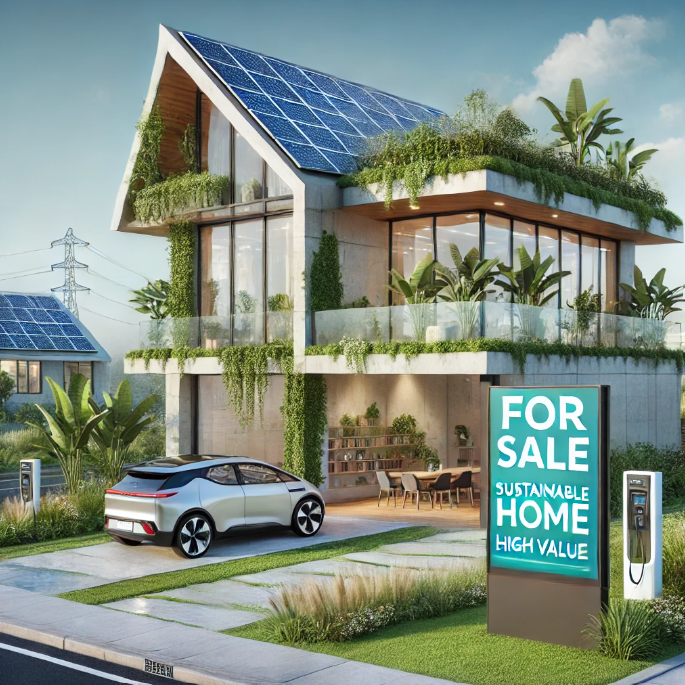
As we approach the mid-2020s, the real estate market is witnessing a significant shift towards sustainability. Homeowners and buyers alike are increasingly recognizing the importance of eco-friendly features in residential properties. This growing trend is not just about reducing environmental impact; it's also about smart investment. Sustainable homes are becoming more than just a niche market—they're the future of real estate.
In this comprehensive guide, we'll explore how eco-friendly features can substantially boost property value, making them a win-win for both the environment and your wallet. Whether you're a homeowner looking to upgrade, a buyer searching for a future-proof investment, or a real estate professional staying ahead of market trends, understanding the impact of sustainability on property value is crucial in 2025's real estate landscape.
A sustainable home is designed to minimize environmental impact while maximizing efficiency and comfort. These homes incorporate features that reduce energy consumption, conserve water, utilize sustainable materials, and promote healthy living environments.
Recent statistics show a remarkable uptick in green building practices. According to the U.S. Green Building Council, the number of LEED-certified homes has grown by 19% since 2017. This trend is expected to accelerate, with projections suggesting that by 2025, over 60% of new residential constructions will incorporate multiple eco-friendly features.
Several key factors are propelling this shift:
Environmental Concerns: Increasing awareness of climate change and environmental degradation.
Rising Energy Costs: The desire to reduce long-term utility expenses.
Government Incentives: Tax breaks and rebates for eco-friendly home improvements.
Health Consciousness: Growing recognition of the health benefits of non-toxic, sustainable living spaces.
Certifications like LEED (Leadership in Energy and Environmental Design), ENERGY STAR, and WELL Building Standard are becoming increasingly recognized and valued in the real estate market. These certifications provide a standardized measure of a home's sustainability, influencing both market value and buyer perception.
Solar energy has become more accessible and efficient than ever. Modern solar panels can significantly reduce or even eliminate electricity bills. In 2025, we're seeing more integrated solar roof tiles and high-efficiency panels that blend seamlessly with home design.
Advanced window technologies, such as low-E coatings and triple-pane designs, dramatically reduce heat transfer. Coupled with high-performance insulation materials like aerogel and vacuum-insulated panels, these features can cut heating and cooling costs by up to 30%.
AI-driven smart home systems now offer unprecedented control over energy usage. From learning thermostats to automated lighting and appliance management, these technologies optimize energy consumption based on occupants' habits and preferences.
High-efficiency toilets, showerheads, and faucets can reduce water usage by up to 60% compared to traditional fixtures. In 2025, we're seeing more widespread adoption of ultra-low-flow fixtures that maintain performance while further reducing water consumption.
Advanced rainwater collection and filtration systems are becoming standard in many new constructions. These systems can provide water for irrigation, toilet flushing, and even potable use with proper treatment.
Xeriscaping and native plant landscaping not only reduce water usage but also create low-maintenance, attractive outdoor spaces. Smart irrigation systems that adjust based on weather conditions and soil moisture levels are now commonplace.
The use of recycled steel, reclaimed wood, and other repurposed materials has moved beyond niche eco-builds to mainstream construction. These materials reduce environmental impact while often adding unique aesthetic value.
Volatile Organic Compounds (VOCs) have been largely phased out in favor of healthier alternatives. Low-VOC and zero-VOC paints and finishes are now the norm, improving indoor air quality without compromising on color or durability.
Bamboo, cork, and other rapidly renewable materials have become popular flooring choices. Advances in manufacturing have improved their durability and aesthetic appeal, making them competitive with traditional hardwoods.
Energy Recovery Ventilators (ERVs) and Heat Recovery Ventilators (HRVs) are now standard in many new homes, ensuring a constant supply of fresh air while minimizing energy loss.
From formaldehyde-free insulation to natural fiber carpets, the use of non-toxic materials has become a key selling point for health-conscious buyers.
Whole-house air purification systems, often integrated with HVAC systems, have become more sophisticated. Some now use advanced technologies like photocatalytic oxidation to remove pollutants and allergens.
The incorporation of eco-friendly features has a significant positive impact on property values. A study by the National Association of Realtors found that homes with green certifications sold for 2.7% more on average compared to similar, non-certified homes.
Homes with energy-efficient features are increasingly attractive to buyers due to lower operating costs. For example, solar panels can increase a home's value by up to 4.1%, according to a study by Zillow.
While some eco-friendly upgrades require significant upfront investment, many offer impressive long-term returns. For instance, a high-efficiency HVAC system can recoup its cost within 5-10 years through energy savings, while continuing to add value to the property.
As environmental consciousness grows, so does the demand for sustainable homes. In a 2024 survey, 85% of millennials, now a dominant force in the housing market, expressed a preference for eco-friendly homes.
A 2,500 sq ft home in San Diego saw its value increase by $20,000 after the installation of a $15,000 solar panel system. The homeowners also benefited from a 70% reduction in their annual energy bills.
A brownstone in Brooklyn underwent a green renovation using sustainable materials and energy-efficient systems. Post-renovation, the property value increased by 28%, significantly outperforming similar non-renovated properties in the area.
A new housing development in Austin, Texas, featuring comprehensive eco-friendly designs, sold out 30% faster than conventional developments in the same area, with a 15% price premium.
Start with an energy audit to identify the most impactful upgrades for your specific home.
Prioritize improvements based on potential energy savings and ROI.
Consider the local climate when choosing features (e.g., solar panels in sunny regions, extra insulation in colder climates).
Work with certified green builders or contractors experienced in sustainable renovations.
Research available tax incentives and rebates to offset costs.
As we look towards the latter half of the 2020s, several trends are emerging:
Integration of renewable energy storage solutions, allowing homes to be more self-sufficient.
Increased use of sustainable, biobased materials in construction.
Implementation of AI and IoT for more sophisticated energy and resource management.
Growing emphasis on resilient design to withstand extreme weather events.
While the benefits of eco-friendly homes are clear, there are considerations to keep in mind:
Initial costs can be high, though long-term savings often justify the investment.
Some features require specialized maintenance.
The aesthetic impact of certain eco-friendly features (like solar panels) may not appeal to all buyers.
The rapid pace of technological advancement can make some features obsolete quickly.
As we navigate the real estate landscape of 2025, it's clear that sustainable homes are not just a passing trend but a fundamental shift in how we view and value properties. The integration of eco-friendly features offers a rare opportunity where environmental responsibility aligns perfectly with financial benefit.
For homeowners, the message is clear: investing in sustainability is investing in your property's future value. For buyers, understanding and appreciating these features can lead to smarter, more valuable purchases. And for real estate professionals, expertise in sustainable homes is becoming not just an advantage but a necessity.
As we move forward, the definition of a desirable home will increasingly include its environmental footprint alongside traditional factors like location and size. By embracing this change, we can create homes that are not only more valuable but also healthier for us and for the planet.

Deepak Raj is a REALTOR® with Royal Canadian Realty, helping buyers, sellers, and investors across Newmarket, Aurora, York Region, and the GTA. He specializes in residential resale, new constructi....
Canada's Housing Recovery Is Coming — But Don't Expect a BoomWhat RBC's Latest Forecast Means for Buyers and Sellers in 2026-2027If you've been waiting for a sign that the Canadian housing
GTA & York Region Real Estate Market Update: August 2026What the latest TRREB numbers mean in Newmarket, Aurora, Markham, Vaughan, Simcoe County and across Southern OntarioBy Deepak Raj, Realtor
Newmarket Market Data · July 2026How Long Does It Really Take to Sell a House in Newmarket?2026 Market Data, Neighbourhood-Level Days on Market & What It Means for Your SaleQuick AnswerAs
Deepak Raj Realtor Royal Canadian Realty, BrokerageBook a Free ConsultationUnderstanding your Buyer Representation Agreement before you sign matters as much as the offer itself.Ontario Buyer's&

The listing data displayed is deemed reliable but is not guaranteed accurate by CREA®. Data last updated on September 22, 2026 5:42 PM UTC The trademarks REALTOR®, REALTORS®; and the REALTOR® logo are controlled by The Canadian Real Estate Association (CREA®) and identify real estate professionals who are members of CREA®. Used under license. The trademarks MLS®, Multiple Listing Service® and the associated logos are owned by The Canadian Real Estate Association (CREA®) and identify the quality of services provided by real estate professionals who are members of CREA®. Used under license.
Show More...
 Data provided by the Ontario Regional Technology & Information Systems. The information is deemed reliable, but is not guaranteed. Not intended to solicit buyers or sellers, landlords or tenants currently under contract.
The trademarks REALTOR®, REALTORS® and the REALTOR® logo are controlled by The Canadian Real Estate Association (CREA) and identify real estate professionals who are members of CREA. The trademarks MLS®, Multiple Listing Service® and the associated logos are owned
by CREA and identify the quality of services provided by real estate professionals who are members of CREA. Used under license.
REALTOR® contact information provided to facilitate inquiries from consumers interested in Real Estate services. Please do not contact the website owner with unsolicited commercial offers.
Show More...
Data provided by the Ontario Regional Technology & Information Systems. The information is deemed reliable, but is not guaranteed. Not intended to solicit buyers or sellers, landlords or tenants currently under contract.
The trademarks REALTOR®, REALTORS® and the REALTOR® logo are controlled by The Canadian Real Estate Association (CREA) and identify real estate professionals who are members of CREA. The trademarks MLS®, Multiple Listing Service® and the associated logos are owned
by CREA and identify the quality of services provided by real estate professionals who are members of CREA. Used under license.
REALTOR® contact information provided to facilitate inquiries from consumers interested in Real Estate services. Please do not contact the website owner with unsolicited commercial offers.
Show More...