
Canada's Housing Recovery Is Coming — But Don't Expect a BoomWhat RBC's Latest Forecast Means for Buyers and Sellers in 2026-2027If you've been waiting for a sign that the Canadian housing

Dated: September 21 2026
Views: 39
What RBC's Latest Forecast Means for Buyers and Sellers in 2026-2027
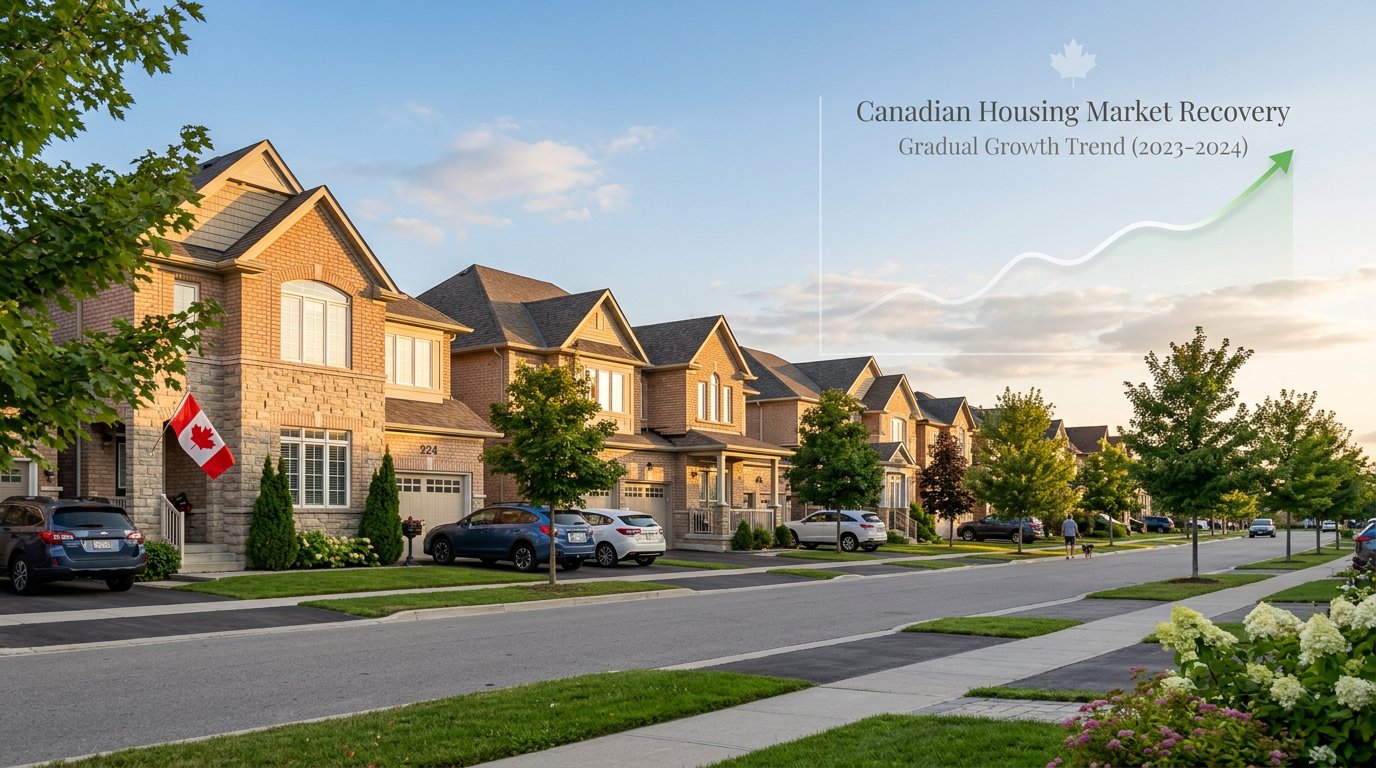
If you've been waiting for a sign that the Canadian housing market is turning a corner, RBC Economics just gave you one — with a big caveat. In its mid-year housing outlook, RBC says the recovery has already begun, but it arrived too late to stop home sales and prices from slipping further in 2026. The good news: 2027 is shaping up to be a meaningfully better year, especially here in Ontario.
Here's a breakdown of what the numbers actually say, and what it means if you're thinking about buying, selling, or just watching the market from the sidelines.
RBC assistant chief economist Robert Hogue described the path forward best: recovery will move in "two steps forward followed by a step back," with different regions improving and slipping at different times. This isn't a market that's about to snap back to pre-pandemic highs — it's one that's stabilizing gradually, market by market.
Since April, home resales have been improving, inventory has leveled off, and price declines have started to slow. But RBC is clear that this momentum builds through 2026 rather than delivering an immediate rebound.
RBC's national forecast shows a market that gets worse before it gets better:
2026: Home resales are forecast to fall 3.6% to 453,200 units, while the national benchmark price is expected to decline 2.3% to $794,200.
2027: Sales are projected to rebound 6.7% to 483,600 units, with the benchmark price edging up 0.8% to $800,700.
Even with that rebound, RBC notes sales will remain well below pre-pandemic levels, and home values will sit only slightly above their cyclical low point. This is a recovery in the technical sense, not a return to the frenzied markets of 2021-2022.
(Chart: National Home Resales and Benchmark Price, 2026 vs. 2027 — see attached graphic)
This is the part of the report that should catch every agent's attention. RBC estimates that more than 400,000 Canadian households may not have formed since 2019 — meaning hundreds of thousands of would-be buyers have simply put their plans on hold as ownership costs climbed. That includes renters staying put longer than they wanted to, and homeowners delaying upsizing or downsizing moves.
That's a massive pool of pent-up demand. And there are reasons to believe some of it is ready to move:
Canadians are saving at a rate near a 25-year high.
Employment among people aged 25 to 34 is currently above its historical average.
RBC expects this pent-up demand to outweigh the drag from slower population growth and reduced immigration targets.
In short, the buyers are out there. They're just waiting for the right combination of confidence and affordability to jump back in.
If you or your clients have been hoping rates fall further, RBC's message is blunt: don't count on it. "We believe they are as low as they will get this cycle," Hogue wrote. RBC expects the Bank of Canada to hold its policy rate through the end of 2026, then start raising it again in 2027, with long-term rates drifting modestly higher through the end of that year.
For anyone sitting on the fence waiting for a better rate environment, this is a signal worth sharing: the rate backdrop we have right now may be the best it gets this cycle.
This is the most relevant piece for our local market. RBC forecasts that Ontario and British Columbia will post some of the strongest sales growth in the country in 2027, as improving affordability draws sidelined buyers back in.
Ontario: Sales are forecast to decline 0.5% in 2026, then rise 8.2% in 2027. Home values are expected to increase 0.7% in 2027.
B.C.: Sales are forecast to fall 4.6% in 2026, then climb 7.8% in 2027. Home values are expected to rise 0.5% in 2027.
(Chart: 2027 Sales Growth Forecast — Ontario, B.C., Alberta — see attached graphic)
One caveat worth flagging for condo owners and investors: RBC expects the condo segment to lag. High inventory levels in the Toronto and Vancouver regions, combined with soft investor demand, could keep condo prices under pressure into 2027.
Not every province follows the same script. Markets that held up relatively well through the downturn — think Saskatchewan, Manitoba, and Atlantic Canada — are expected to see price growth slow in 2027 as population growth eases and inventory builds:
Saskatchewan: 2.5%
Manitoba: 1.9%
Newfoundland and Labrador: 1.3%
Quebec: 1.2%
Nova Scotia: 1.1%
New Brunswick: 0.9%
Prince Edward Island: 0.3%
Alberta is the outlier among the "hot" markets, expected to stay relatively strong with 7.1% sales growth and a 1.8% increase in home values in 2027.
(Chart: 2027 Price Growth Forecast — Resilient Markets — see attached graphic)
RBC isn't pretending this forecast is bulletproof. The bank flagged several risks that could push the recovery further out:
Renewed trade tensions with the United States
Geopolitical conflict
Deeper-than-expected effects from immigration cuts
Persistent affordability challenges that keep buyers on the sidelines
It's also worth remembering this market has already seen four false starts since 2023 — periods of improvement interrupted by outside shocks. RBC's own economists are cautious about calling this the definitive turning point.
If you're a buyer who has been waiting for rates to drop further, RBC's outlook suggests the current rate environment may be close to the best you'll see this cycle — which shifts the calculus toward acting sooner rather than later once you're financially ready.
If you're a seller, patience matters. Ontario's rebound is expected to build through 2027, not arrive overnight, so pricing realistically today and positioning for improving conditions next year is a more reliable strategy than waiting for a sudden turnaround.
If you're an investor eyeing the condo market, RBC's caution about elevated inventory and soft demand in Toronto is a signal to look closely at fundamentals in any specific building or neighbourhood before assuming the broader recovery applies evenly across all property types.
As always, national and provincial forecasts are a starting point — not a substitute for a conversation about your specific neighbourhood, price point, and timeline. If you'd like to talk through what this means for your plans, reach out anytime.
Source: RBC Economics mid-year housing outlook, as reported by Real Estate Magazine (REM), September 2026.

Deepak Raj is a REALTOR® with Royal Canadian Realty, helping buyers, sellers, and investors across Newmarket, Aurora, York Region, and the GTA. He specializes in residential resale, new constructi....
Canada's Housing Recovery Is Coming — But Don't Expect a BoomWhat RBC's Latest Forecast Means for Buyers and Sellers in 2026-2027If you've been waiting for a sign that the Canadian housing
GTA & York Region Real Estate Market Update: August 2026What the latest TRREB numbers mean in Newmarket, Aurora, Markham, Vaughan, Simcoe County and across Southern OntarioBy Deepak Raj, Realtor
Newmarket Market Data · July 2026How Long Does It Really Take to Sell a House in Newmarket?2026 Market Data, Neighbourhood-Level Days on Market & What It Means for Your SaleQuick AnswerAs
Deepak Raj Realtor Royal Canadian Realty, BrokerageBook a Free ConsultationUnderstanding your Buyer Representation Agreement before you sign matters as much as the offer itself.Ontario Buyer's&

The listing data displayed is deemed reliable but is not guaranteed accurate by CREA®. Data last updated on September 22, 2026 5:42 PM UTC The trademarks REALTOR®, REALTORS®; and the REALTOR® logo are controlled by The Canadian Real Estate Association (CREA®) and identify real estate professionals who are members of CREA®. Used under license. The trademarks MLS®, Multiple Listing Service® and the associated logos are owned by The Canadian Real Estate Association (CREA®) and identify the quality of services provided by real estate professionals who are members of CREA®. Used under license.
Show More...
 Data provided by the Ontario Regional Technology & Information Systems. The information is deemed reliable, but is not guaranteed. Not intended to solicit buyers or sellers, landlords or tenants currently under contract.
The trademarks REALTOR®, REALTORS® and the REALTOR® logo are controlled by The Canadian Real Estate Association (CREA) and identify real estate professionals who are members of CREA. The trademarks MLS®, Multiple Listing Service® and the associated logos are owned
by CREA and identify the quality of services provided by real estate professionals who are members of CREA. Used under license.
REALTOR® contact information provided to facilitate inquiries from consumers interested in Real Estate services. Please do not contact the website owner with unsolicited commercial offers.
Show More...
Data provided by the Ontario Regional Technology & Information Systems. The information is deemed reliable, but is not guaranteed. Not intended to solicit buyers or sellers, landlords or tenants currently under contract.
The trademarks REALTOR®, REALTORS® and the REALTOR® logo are controlled by The Canadian Real Estate Association (CREA) and identify real estate professionals who are members of CREA. The trademarks MLS®, Multiple Listing Service® and the associated logos are owned
by CREA and identify the quality of services provided by real estate professionals who are members of CREA. Used under license.
REALTOR® contact information provided to facilitate inquiries from consumers interested in Real Estate services. Please do not contact the website owner with unsolicited commercial offers.
Show More...