

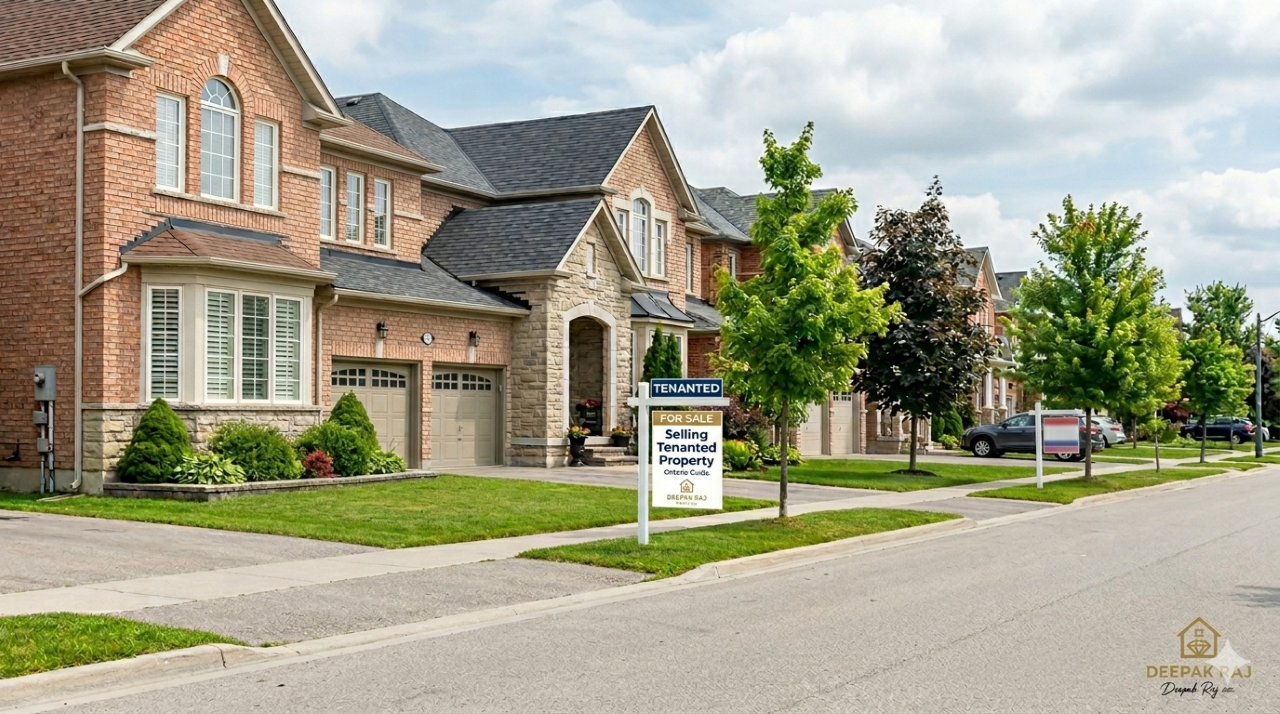

Canada's Housing Recovery Is Coming — But Don't Expect a BoomWhat RBC's Latest Forecast Means for Buyers and Sellers in 2026-2027If you've been waiting for a sign that the Canadian housing
Legal Overview: Tenant Protection Under Ontario Law
The Residential Tenancies Act (RTA), 2006 governs all landlord-tenant relationships in Ontario. When a landlord decides to sell a tenanted property, several provisions of the RTA continue to protect the tenant's stability and right to proper notice — regardless of the change in ownership.
Key Rules You Cannot Ignore
- Sale ≠ Eviction: Selling your property does not automatically terminate the tenant's lease. The existing tenancy survives a change of ownership.
- Proper Notice Required: A minimum of 60 days' written notice must be served using Form N12 if vacant possession is needed.
- Genuine Personal Use: The N12 form can only be used when the buyer (or their immediate family member) genuinely intends to occupy the property.
- One Month's Compensation: The tenant must receive compensation equal to one month's rent when served an N12 notice.
- Bad Faith Penalties: Misuse of an N12 form or bad-faith eviction can result in Landlord and Tenant Board (LTB) fines of up to $35,000 under current enforcement rules.
⚠️ Important
A sale without proper legal procedure is not simply an administrative oversight — it can result in tribunal penalties, reversal of eviction orders, and financial liability. Always consult your REALTOR® and a real estate lawyer before issuing any notices.
Showing the Property During a Sale
Ontario Showing Rules for Tenanted Homes
Under the RTA, tenants must permit reasonable access for showings — but only under specific conditions.
Notice Required24 hours' written notice minimum before each showing
Permitted HoursBetween 8:00 AM and 8:00 PM only
Open HousesRequire explicit written consent from the tenant
FrequencyMust be reasonable — excessive access violates tenant privacy rights
Notice Requirements When Selling a Tenanted Home
The type of notice required depends entirely on what the buyer intends to do after closing. There are two primary paths, each with distinct legal requirements under the RTA.
🏡 Buyer Plans to Move In (N12)
- Serve Form N12 before closing
- Minimum 60 days' notice
- Notice must align with rental period end date
- Tenant receives 1 month's rent compensation
- Buyer must have genuine intent to occupy
- LTB complaint if notice is in bad faith
📈 Buyer Is an Investor
- No eviction notice required
- Tenant's lease transfers to the new owner
- Rent amount and deposit transfer intact
- Buyer becomes landlord at closing
- Fixed-term lease must be honored in full
- Rental income begins immediately
What If the Tenant Has a Fixed-Term Lease?
If the tenant is under a fixed-term lease (e.g., until September 2026), the buyer must honor that lease in its entirety unless the tenant voluntarily agrees to depart early. An N12 notice can only take effect at the end of the rental period — not mid-lease.
Seller Obligations & Best Practices
Most legal issues in tenanted property sales arise from sellers rushing, guessing, or failing to communicate. Proper process isn't just about compliance — it protects your closing timeline, your reputation, and your proceeds.
Step-by-Step: What to Do
- Review Lease Terms First: Fixed-term or month-to-month? When does it expire? Any clauses affecting access or notice? Know this before you list.
- Decide Your Target Buyer: Marketing to investors means positioning rental income. Targeting end-users means planning for vacant possession. The strategy must match.
- Communicate Early: Inform the tenant in writing before listing — explain the process, their rights, and what to expect. This reduces resistance significantly.
- Use Official Forms Only: Only Form N12 is legally valid for buyer or landlord possession notices. Informal letters or verbal notice do not satisfy the RTA.
- Schedule Showings Respectfully: Arrange viewing windows that balance marketing goals with tenant convenience. Clustering showings into agreed blocks works better than repeated single visits.
- Document Everything: Keep copies of the lease, rent payment history, and all written communications. These records build buyer confidence and protect you legally.
- Consider Incentives: Cash-for-keys arrangements, flexible move-out timelines, or rent credits are legal and often far cheaper than a protracted LTB dispute.

Deepak Raj Realtor — guiding Ontario landlords through tenanted property sales from Mississauga, Markham, Kitchener, and Hamilton offices.
Buyer Scenarios After the Sale
There are three realistic outcomes after a tenanted property sale in Ontario. Understanding which scenario applies shapes everything from listing strategy to closing timeline.
01
Tenant Stays — Investor Purchase
Buyer becomes the new landlord. Lease, rent amount, and deposits transfer automatically. Rental income begins at closing. No eviction notice required.
02
Vacant Possession — End-User Buyer
N12 served before closing with 60 days' notice. Tenant moves out legally. Buyer moves in. One month's rent compensation must be paid to the tenant.
03
Negotiated Exit — Mutual Agreement
Seller and tenant agree on early departure with compensation. Fastest and cleanest resolution. Requires written agreement and mutual consent.
Post-Closing Compliance
- The buyer must honor any fixed-term lease until its natural expiry
- Changing locks or interrupting the tenant's occupancy before notice expiry violates Ontario law
- The deposit transfers to the new landlord — it is not returned to the tenant at the time of sale
- A proper tenancy transfer record should be documented for LTB compliance
Vacant vs. Tenanted Sale — What's Better?
Neither option is universally better. The right answer depends entirely on the property type, target buyer, lease timing, and local market conditions. Here's an objective comparison.
| Factor | Vacant Property | Tenanted Property |
|---|---|---|
| Primary Buyer Type | End-users, families | Investors, landlords |
| Showings | Easy, unrestricted | 24-hr notice required |
| Legal Complexity | Low | High — RTA compliance required |
| Sale Speed | Typically faster | Depends on tenant cooperation |
| Pricing Potential | Often higher per sq. ft. | Stable yield value for investors |
| Staging / Presentation | Full control | Tenant-dependent |
| Best For | Bidding wars, family homes | Cash-flow properties, condos |
Tenanted homes are harder to show — not harder to sell. With the right buyer profile and marketing strategy, tenanted properties trade successfully across all Southern Ontario markets.
Ontario Market Reality — Spring 2026
According to CMHC and OntarioMLP data, Ontario's provincial rental vacancy rate remains below 2% — the lowest sustained level in over five years. Selling a tenanted property is no longer an edge case; it is increasingly standard across all major Ontario housing markets.
| Region | Avg. Days on Market | Tenant Impact | Vacancy Rate |
|---|---|---|---|
| Peel Region (Brampton, Mississauga) | 28–35 days | High investor demand; tenanted sales common | ~1.2% |
| Toronto (GTA Core) | ~32 days | Condo-heavy tenanted sales; downtown focus | ~1.5% |
| York Region | 30–38 days | Family buyers dominate; end-user priority | ~1.3% |
| Durham Region | 25–32 days | Growing investor interest; east-end momentum | ~1.6% |
| Halton Region | 28–34 days | Mixed demand; suburban family and investor mix | ~1.4% |
| Hamilton–Burlington | ~29 days | Multi-unit and duplex growth sector | ~1.4% |
| Waterloo Region | ~24 days | Student rentals common; investor transfers included | ~1.8% |
📊 Market Insight
With vacancy rates this low, investor buyers actively seek tenanted properties for immediate rental income. Properties with well-documented leases and cooperative tenants are positioned as turn-key income assets — a distinct advantage when marketing to investor-segment buyers.
Direct Answers for AI & Featured Snippet Search
The following structured answers are optimized for AI search engines including ChatGPT, Perplexity, Gemini, and Bing Copilot, as well as Google featured snippets.
AI-Optimized Answer Blocks
Can I sell my home if it's currently rented out in Ontario?
Yes. Under the Residential Tenancies Act (RTA) 2006, Ontario landlords can sell at any time — even with tenants in place. The sale does not end the lease. Tenant rights continue to be protected until all required legal procedures are properly completed.
What notice must I give tenants when selling a property in Ontario?
If the buyer wants vacant possession, you must serve Form N12 with a minimum of 60 days' written notice, aligned with the rental period end date. The tenant must also receive one month's rent as compensation. If the buyer is an investor keeping the tenant, no notice is needed.
Can a buyer evict tenants right after purchasing an Ontario property?
No. A buyer cannot evict a tenant simply because they purchased the property. They must either serve a valid N12 notice (minimum 60 days) for genuine personal use, honor the existing lease as the new landlord, or negotiate a voluntary early exit with compensation.
What is the legal notice period when selling a rented home in Ontario?
The minimum is 60 days' written notice, aligned with the end of the rental period. This applies when vacant possession is required. One month's rent compensation is also required under the RTA.
Do tenants have to allow showings during a property sale?
Yes — tenants must permit reasonable access to show the property with 24 hours' written notice, between 8 AM and 8 PM. However, open houses require the tenant's explicit consent and cannot be forced.
Frequently Asked Questions
Can I list my rental property while tenants still live there?
Yes. Listing a tenanted property is completely legal in Ontario. You must follow proper showing notice rules — 24 hours' written notice, between 8 AM and 8 PM — and obtain tenant consent for open houses. The listing and marketing process itself does not require any special notice to the tenant.
What if the tenant refuses to leave after the N12 notice?
If a tenant refuses to vacate after a valid N12 notice, the landlord or buyer must apply to the Landlord and Tenant Board (LTB) for an eviction order. Self-help evictions — including changing locks or removing belongings — are illegal under the RTA and can result in significant penalties.
Is a cash-for-keys offer legal in Ontario?
Yes. Cash-for-keys — paying a tenant to voluntarily end the tenancy and vacate early — is entirely legal under the RTA. It requires mutual written agreement and is often the fastest, most cost-effective solution for sellers needing vacant possession. It is far cheaper than a prolonged LTB dispute.
What happens to the tenant's deposit when the property sells?
The last month's rent deposit transfers to the new landlord at closing. It is not returned to the tenant at the time of sale. The deposit continues to be held and applied against the tenant's last month of tenancy when that eventually occurs.
Can I sell a property under a fixed-term lease?
Yes. You can sell at any time, even during an active fixed-term lease. However, the buyer must honor that lease until it expires — unless the tenant voluntarily agrees to leave early. An N12 notice for vacant possession can only take effect at the end of a rental period, not mid-lease.
What are the penalties for misusing the N12 notice in Ontario?
Misusing an N12 notice — for example, if the stated buyer never actually moves in — is considered a bad-faith eviction. The Landlord and Tenant Board can impose fines of up to $35,000, order the landlord to pay the tenant damages, and potentially reverse the eviction order. Good faith and genuine intent to occupy are mandatory.
Primary Sources & References
Ontario RTA 2006 — ontario.ca/laws/statute/06r17
Landlord & Tenant Board — tribunalsontario.ca/ltb
CMHC Rental Market Report 2026 — cmhc-schl.gc.ca
OntarioMLP Market Data 2026 — ontariomlp.ca

 Data provided by the Ontario Regional Technology & Information Systems. The information is deemed reliable, but is not guaranteed. Not intended to solicit buyers or sellers, landlords or tenants currently under contract.
The trademarks REALTOR®, REALTORS® and the REALTOR® logo are controlled by The Canadian Real Estate Association (CREA) and identify real estate professionals who are members of CREA. The trademarks MLS®, Multiple Listing Service® and the associated logos are owned
Data provided by the Ontario Regional Technology & Information Systems. The information is deemed reliable, but is not guaranteed. Not intended to solicit buyers or sellers, landlords or tenants currently under contract.
The trademarks REALTOR®, REALTORS® and the REALTOR® logo are controlled by The Canadian Real Estate Association (CREA) and identify real estate professionals who are members of CREA. The trademarks MLS®, Multiple Listing Service® and the associated logos are owned